


Understanding Carpal Tunnel Syndrome
Carpal tunnel syndrome occurs when the median nerve in the wrist becomes compressed by the transverse carpal ligament, causing tingling, numbness, waking at night, weakness or dropping objects, and sometimes discomfort in the hand.
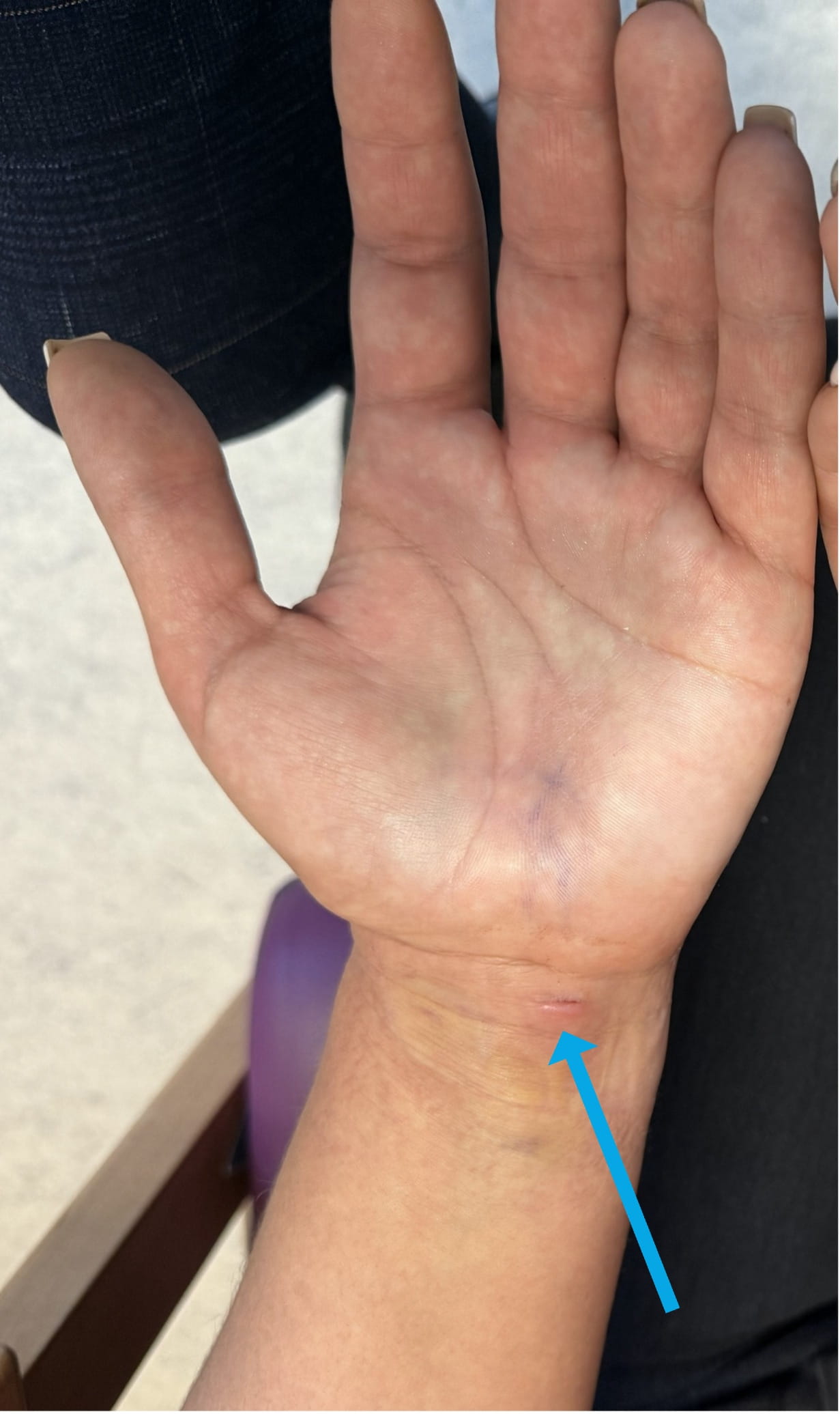
Traditional open carpal tunnel release remains an excellent treatment. I now also offer a new minimally invasive keyhole (ultrasound-guided) option, using a 3-5 mm entry point. This technique almost always allows faster recovery, less scarring, and a quicker return to normal activity.

SYMPTOMS
The classical symptoms of carpal tunnel syndrome are intermittent tingling and numbness in the thumb, index and middle fingers coupled with pain, felt worst at night. Patients frequently wake in the middle of the night with the pain which leads them to shake their hand in order to alleviate it. As the symptoms gets worse, there can be weakness of the hand and dropping things as well as persistent numbness, so that the patient may be unable to feel items properly, for example when trying to pick up a needle.
DIAGNOSIS
The diagnosis is made on the basis of the history and the clinical examination, and if there is doubt, it can be confirmed by undertaking a special investigation known as ‘electromyography (EMG)’, also known as ‘nerve conduction studies’. This is an objective investigation which can detect formally whether the patient has carpal tunnel syndrome or not. It also shows the severity of the nerve compression. It is a very sensitive test, done by a neurophysiologist.
TREATMENTS
There are essentially just three treatments for carpal tunnel syndrome.
1. Wearing of night splints which help reduce the symptoms the patient feels at night.
2. Cortisone injections which can be given relatively painlessly using ultrasound guidance and which will often alleviate the symptoms for many months and can be repeated, provided the patient is not developing irreversible complications of carpal tunnel syndrome.
3. Carpal tunnel release surgery.
Who should have carpal tunnel release surgery?
Patients should have carpal tunnel release surgery if the symptoms they have, are intrusive and have not responded satisfactorily to either night splintage or cortisone injections. Secondly, they should have carpal tunnel release surgery if they are developing potentially irreversible complications, for example persistent numbness and weakness in the hand.
Keyhole Ultrasound-Guided Carpal Tunnel Release
Traditional open carpal tunnel release remains an excellent treatment. I now also offer a new minimally invasive keyhole (ultrasound-guided) option. Through a 3–5mm entry point – about the width of a match head, I introduce a fine instrument and divide the transverse carpal ligament under direct ultrasound visualisation. Because I can see exactly what I am doing throughout, the procedure is both precise and safe.
The procedure is performed under local anaesthetic only, there is no need to starve beforehand, and no general anaesthetic. Using a high-resolution ultrasound scanner, I can see the median nerve, tendons, ligaments and blood vessels in real time on the screen as I work.
- There are several advantages:
- Much smaller incision and minimal scarring.
- Less pain and swelling.
- Most people return to light activities in 1-2 days.
- Quicker return to work and driving (often within a week).
- Patients can have both hands done at once.
- Much lower risk of infection or inflammation (Complex Regional Pain Syndrome).
Am I Suitable?
Most patients with carpal tunnel syndrome are suitable for keyhole release. Ideal candidates include:
- Patients wanting the fastest possible recovery
- Those with no previous wrist surgery
- Patients with normal anatomy on ultrasound scanning
I will confirm your suitability during the consultation. Some patients, for example those with previous wrist surgery, significant scarring, or unusual anatomy, may be better suited to traditional open release, which remains an excellent operation.
Why Choose Keyhole Release?
The benefits compared to traditional open surgery are significant:
| Traditional Open Release | Keyhole Ultrasound-Guided Release | |
|---|---|---|
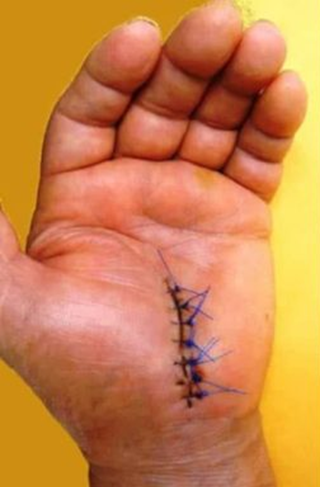
| Incision | 3–5 cm in the palm | 3–5 mm entry point |
| Stitches | Yes | Usually none |
| Anaesthetic | Local, regional or general | Local only |
| Return to light activities | 1–2 weeks | 1–2 days |
| Driving | 1–2 weeks | Often 48 hours |
| Return to work | 3–8 weeks | 3 days – 2 weeks |
| Scar tenderness | Common for several weeks | Very mild |
| Infection risk | Low | Very low |
Both methods are equally effective in the long term, with 90–95% of patients experiencing major improvement or complete relief. The keyhole approach simply gets you there faster, with less discomfort along the way.
What to Expect
The procedure:
The local anaesthetic injection is the most uncomfortable part, a brief sting. I use a specialised anaesthetic which is almost painless to administer and extremely effective. No tourniquet is applied, so there is no cramping sensation during surgery.
The procedure itself takes around 10 minutes. You will feel pressure but not pain. Most patients are surprised how quickly it is over.
Recovery:
- Remove the dressing the following morning
- Wash your hand gently with soap and water and apply a simple plaster
- Begin moving your fingers straight away
- You may use your hand immediately, as comfort allows
- Most patients can drive after 48 hours
- Light activities within 1–2 days
- Gradual return to heavier tasks over 1–2 weeks
Results:
If you have night pain, you will very likely find it has gone that first night. Many patients tell me they sleep better than they have in months.
Tingling usually settles within a few weeks. Numbness improves gradually, depending on how severe it was before surgery. Complete nerve recovery can take several weeks in longstanding cases.
Having Both Hands Done at Once
Because recovery is so rapid with the keyhole technique, it is entirely practical to have both hands treated in the same session. You will need some support from family for the first few days, but most patients manage well and prefer getting everything done at once rather than facing two separate recoveries.
Risks and Complications
All surgery carries some risk. With keyhole ultrasound-guided release:
Rare:
- Infection (much lower than open surgery)
- Incomplete release (very rare. If this occurs, a further procedure can complete the release)
- Temporary bruising or nerve irritation
- Bleeding
Very rare:
- Nerve injury (the real-time ultrasound visualisation makes this extremely unlikely)
Traditional open surgery carries a higher risk of scar tenderness, prolonged recovery, and Complex Regional Pain Syndrome. These risks are significantly reduced with the keyhole approach.
Frequently Asked Questions
Is keyhole release as effective as open surgery?
Yes. Long-term outcomes are equivalent. Around 90–95% of patients get major improvement or complete relief with either method.
Will I need stitches?
Usually not. The entry point is small enough to heal without sutures.
How soon can I drive?
Most patients can drive after 48 hours, once they feel confident gripping the steering wheel.
Can both hands be treated at once?
Yes, and many patients prefer this option.
Does it work straight away?
Night pain typically disappears immediately. Tingling and numbness improve over the following weeks, depending on how long you had symptoms before surgery.
Is nerve injury a risk?
The risk is very low. Because I can see the nerve throughout the procedure on ultrasound, I can work around it with precision.
What if I’m on blood thinners?
Please discuss this at your consultation. Many patients on anticoagulants can still have the procedure safely.
Self-Pay Package
I offer a self-pay package including initial consultation, keyhole surgery and follow-up appointment. Please contact my secretary to arrange a consultation.
Further Information
More information and postoperative advice is available at CarpalTunnelLondon.co.uk